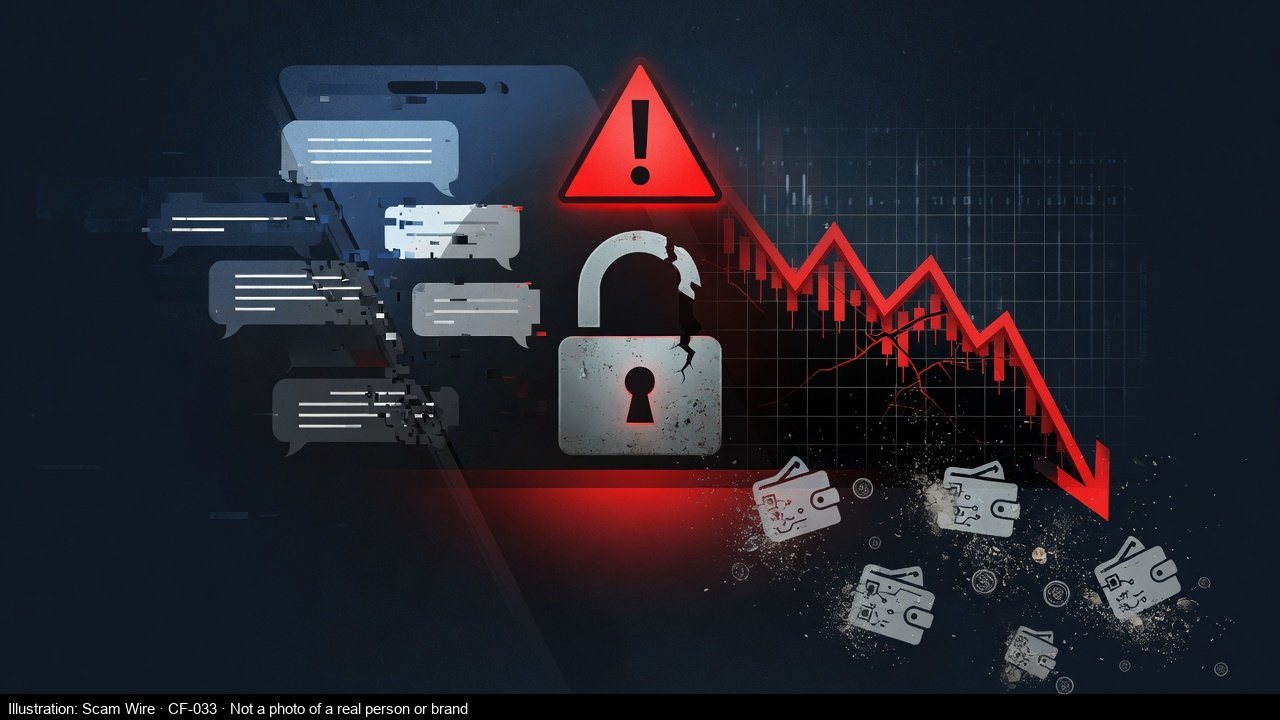
1. The loss numbers that define this news cycle
In April 2026 the U.S. Federal Trade Commission warned that consumers reported more than $7.9 billion in losses to investment scams in 2025, with a median individual loss above $10,000. Source: FTC Consumer Alert — “With people losing big to investment scams…” (16 April 2026) .
Earlier FBI Internet Crime Complaint Center (IC3) reporting placed investment fraud at the top of loss categories, with cryptocurrency investment fraud alone associated with roughly $5.7–$5.8 billion in reported 2024 losses (agency roundings vary by brief), a sharp year-on-year jump. IC3 and blockchain investigators repeatedly flag long-con schemes that mix fake relationships with fake trading dashboards — the industry slang “pig butchering,” which INTERPOL has urged media to use carefully because of harm to victims.
U.S. Department of Justice civil forfeiture actions against crypto laundering clusters (including a complaint against more than $225 million in digital assets linked to cryptocurrency investment / confidence scams) show enforcement is treating these pipelines as industrial money-laundering infrastructure, not isolated romance fraud. Source example: U.S. Attorney’s Office — D.C. forfeiture complaint on crypto confidence scams .
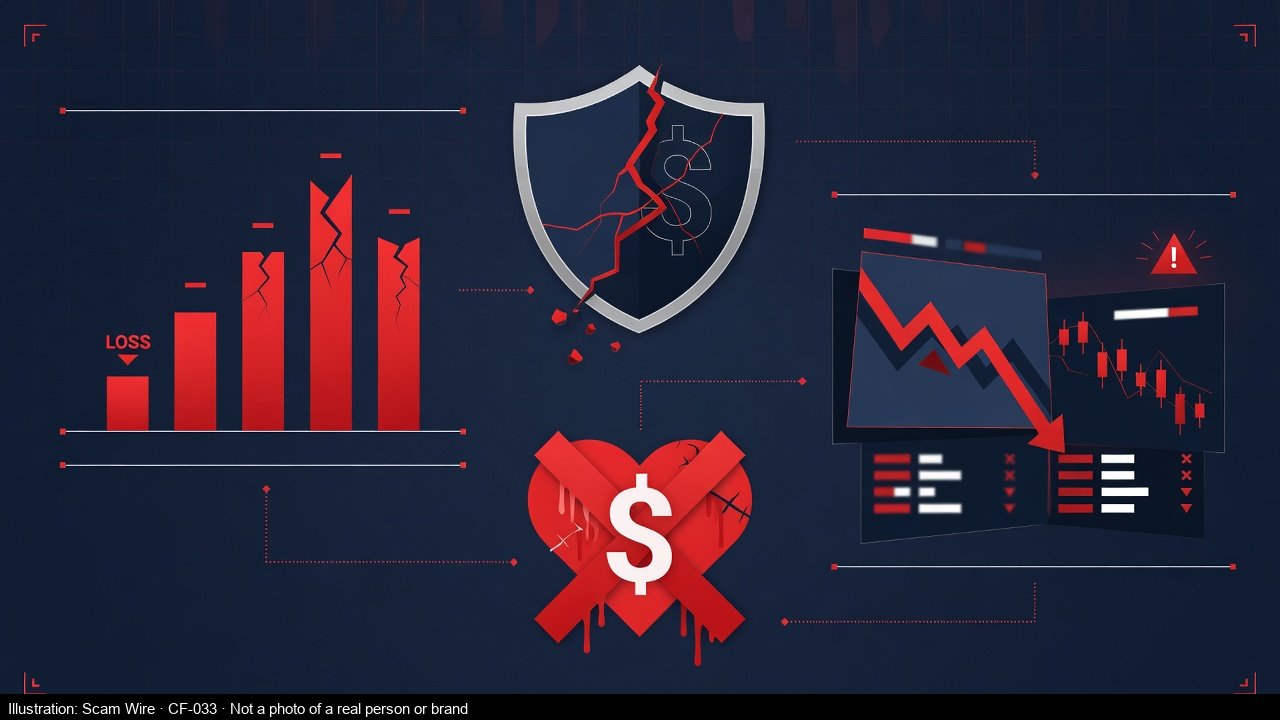
2. How the global scheme actually works (desk anatomy)
Across FTC guidance, FBI victim notices (including Operation Level Up outreach), Secret Service investment-fraud materials, and Treasury FinCEN / OFAC actions, the same spine appears:
- Contact — dating apps, social media, “wrong number,” LinkedIn “investor.”
- Trust build — weeks or months of chat; no immediate money ask.
- Platform — link to a polished site that looks like a broker or crypto exchange.
- Small win — fake early profit; maybe a small withdrawal allowed once.
- Scale-up — pressure to deposit more, borrow, liquidate retirement cash.
- Exit trap — “taxes,” “AML unlock,” “VIP tier,” or frozen wallet until more fees paid.
- Silence — platform goes dark; recovery scammers appear next.
Treasury’s OFAC action against infrastructure providers such as Funnull Technology Inc. (press release on bulk IP hosting for virtual-currency investment scam sites) underlines that these platforms are often mass-hosted, not one-off websites. Source: U.S. Treasury OFAC — action against cyber scam facilitator Funnull .
3. Why this is a banking story as much as a crypto story
- Victims usually fund the scam from bank accounts, cards, or wire rails first.
- Scammers coach “move money fast” before the bank’s fraud team can intervene.
- Secondary scams impersonate regulators, lawyers, or recovery firms after the first loss.
- UK FCA continues high volumes of warnings on unauthorised and clone firms (2,329 firm warnings in 2025 per FCA strategy update) — the onshore “licensed look” that often sits next to offshore deposit instructions. Source: FCA press release, 9 July 2026 .
4. Red flags from official consumer guidance
- Guaranteed high returns with little or no risk
- Pressure to act now or “miss the window”
- Romance or friendship that pivots hard into investing
- Platforms you cannot verify on a real app store / licensed firm register
- Fees required to withdraw “profits”
- Anyone claiming to be a regulator recovering crypto for a fee (FCA has publicly warned about impersonation of the regulator itself)
5. What to do if you are already in the funnel
- Stop sending money immediately — including “unlock” fees
- Contact your bank’s fraud team the same day; ask about recall / APP recovery options where available
- Report to national channels (e.g. FBI IC3 at ic3.gov; FTC report tools; local police; FCA / Action Fraud in the UK)
- Preserve chat logs, wallet addresses, deposit hashes, and domain names
- Treat “asset recovery” cold-callers as a second scam until proven otherwise
6. Why Scam Wire is publishing this now
After covering INTERPOL’s First Light 2026 enforcement wave (CF-032, the open-web data still point to investment and crypto confidence fraud as the largest consumer loss engine in financial crime reporting. The paper trail is often a fake dashboard — not a SWIFT PDF — but the money still leaves a real bank.
Related Scam Wire files: CF-022 clone firms · CF-005 ETFINVEST · CF-004 pressure tactics · CF-002 advance fees.
Primary open-web sources used in this file:
- FTC Consumer Alert (16 Apr 2026)
- FBI IC3 annual / crypto investment fraud reporting
- DOJ / USAO D.C. crypto confidence scam forfeiture
- U.S. Treasury OFAC — Funnull / scam infrastructure
- FCA strategy update (9 Jul 2026)
- U.S. Secret Service — investment fraud overview
Standards: News summary of public official sources. Not legal advice. Report crime to competent authorities. Tips with documents: tip desk.