1. Why this is the banking story that still prints money for scammers
Among investment, trade-finance, and “private placement” frauds, forged SWIFT-style printouts remain the workhorse prop. Fraud intelligence desks and trade-finance investigators repeatedly describe the same stack: a fake or misrepresented MT103 / MT202, sometimes a “conditional” transfer story, then pressure to pay fees so funds can “release.” Victims are shown institutional language — UETR-looking strings, bank names, GPI tags — and invited to confuse a document with a settlement.
Legitimate payment infrastructure does not work that way. Money moves when banks exchange authenticated messages and settle according to their systems — not when a PDF lands in WhatsApp.
2. Global backdrop: social engineering at industrial scale
In July 2026, INTERPOL reported results from Operation First Light 2026 (15 Jan – 30 Apr 2026): a multi-country crackdown on social-engineering scams and related money laundering involving 97 countries, 5,811 arrests, about USD 293 million in intercepted illicit assets, tens of thousands of bank accounts blocked, and more than 150,000 cases analysed. The lesson for desks is not that PDF forgeries vanished — it is that trust theatre + bank rails remains a primary criminal business model.
In parallel, the UK FCA continues to flood its Warning List with unauthorised and clone firms (thousands of alerts year-on-year), while clone-firm banking costumes remain a favourite onshore packaging for offshore fee extraction. See our earlier pattern file: CF-022.
3. Anatomy of the “release fee” / “pay for MT103” pack
- Hook — investment, trade LC/SBLC, blocked funds, or “bank instrument monetization.”
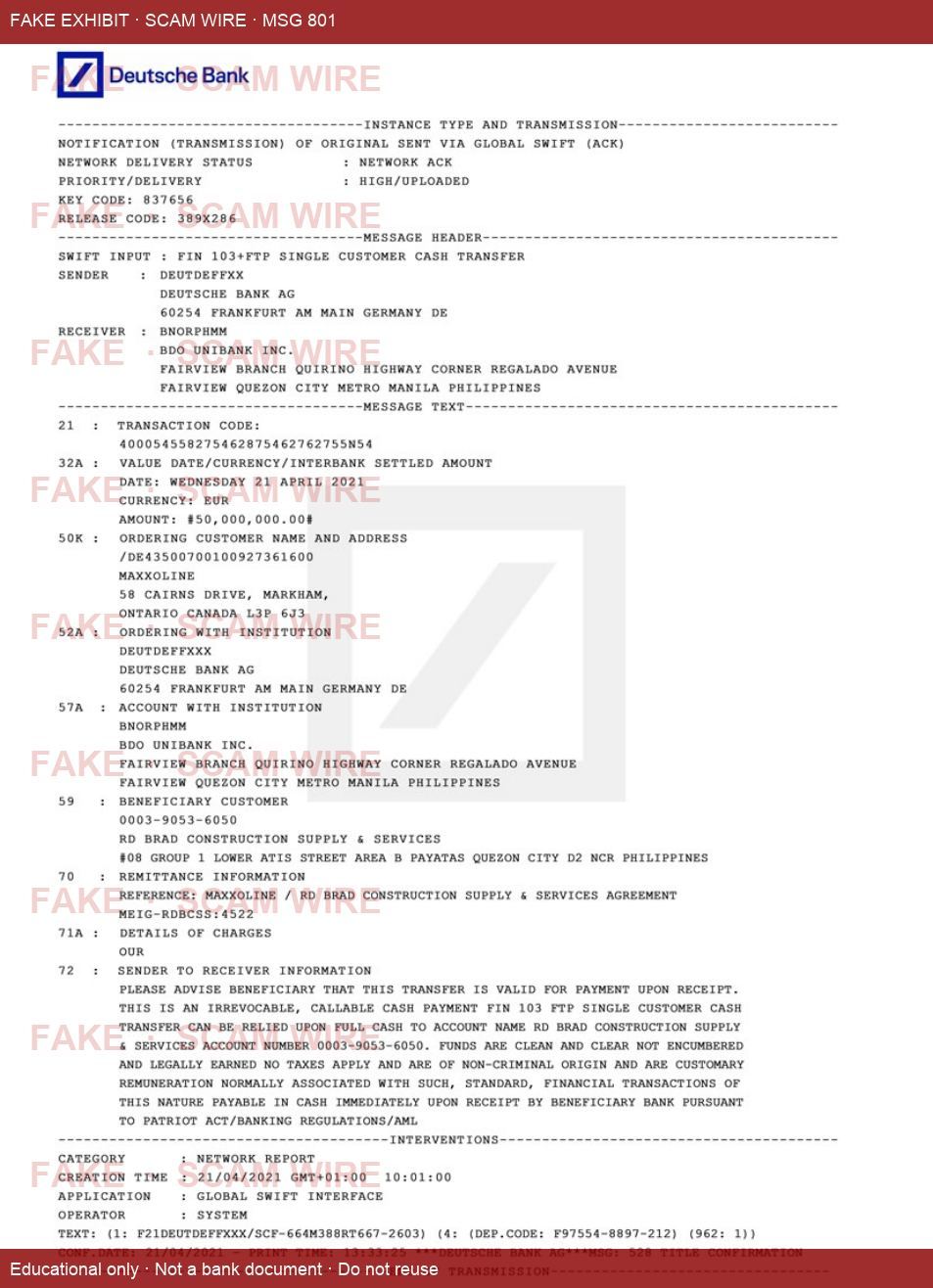
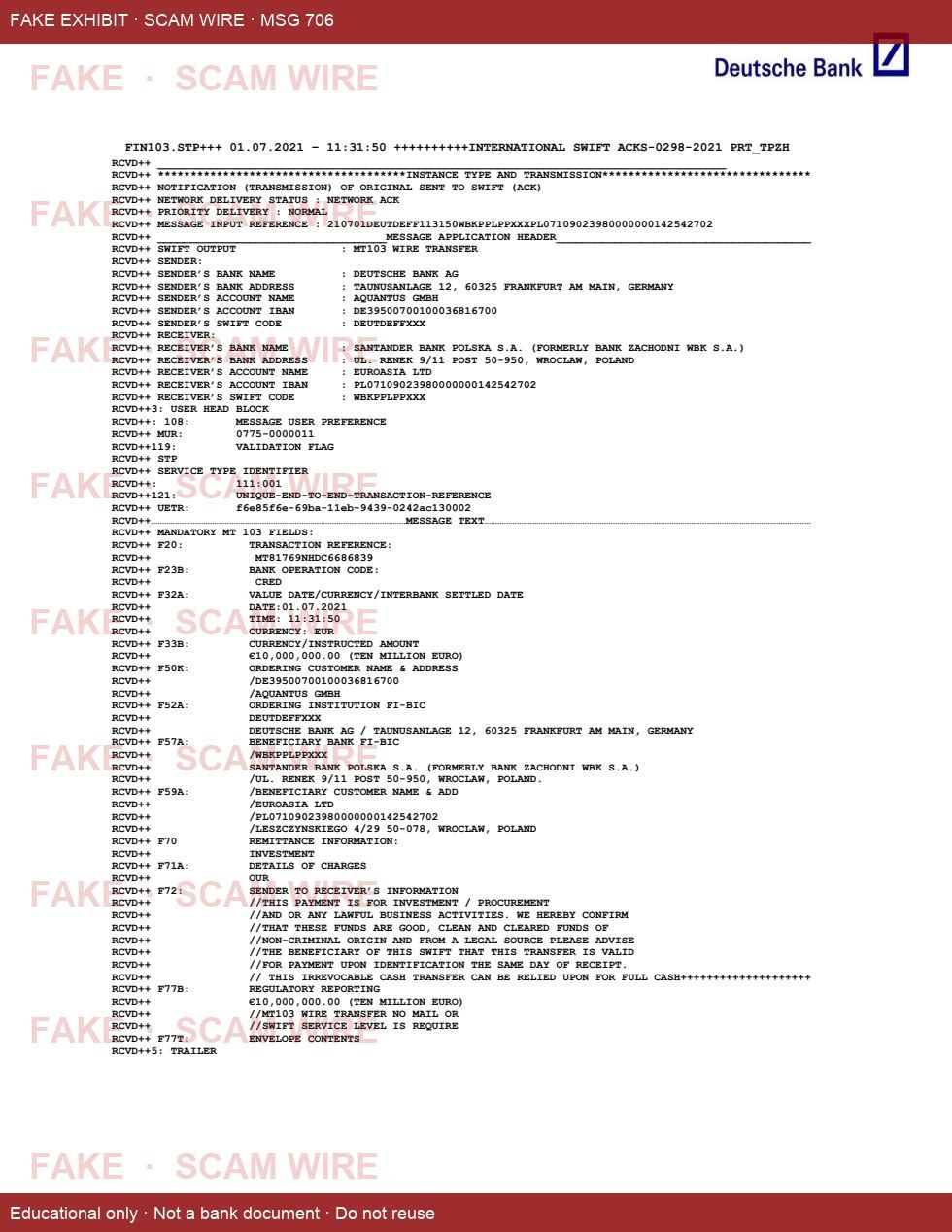
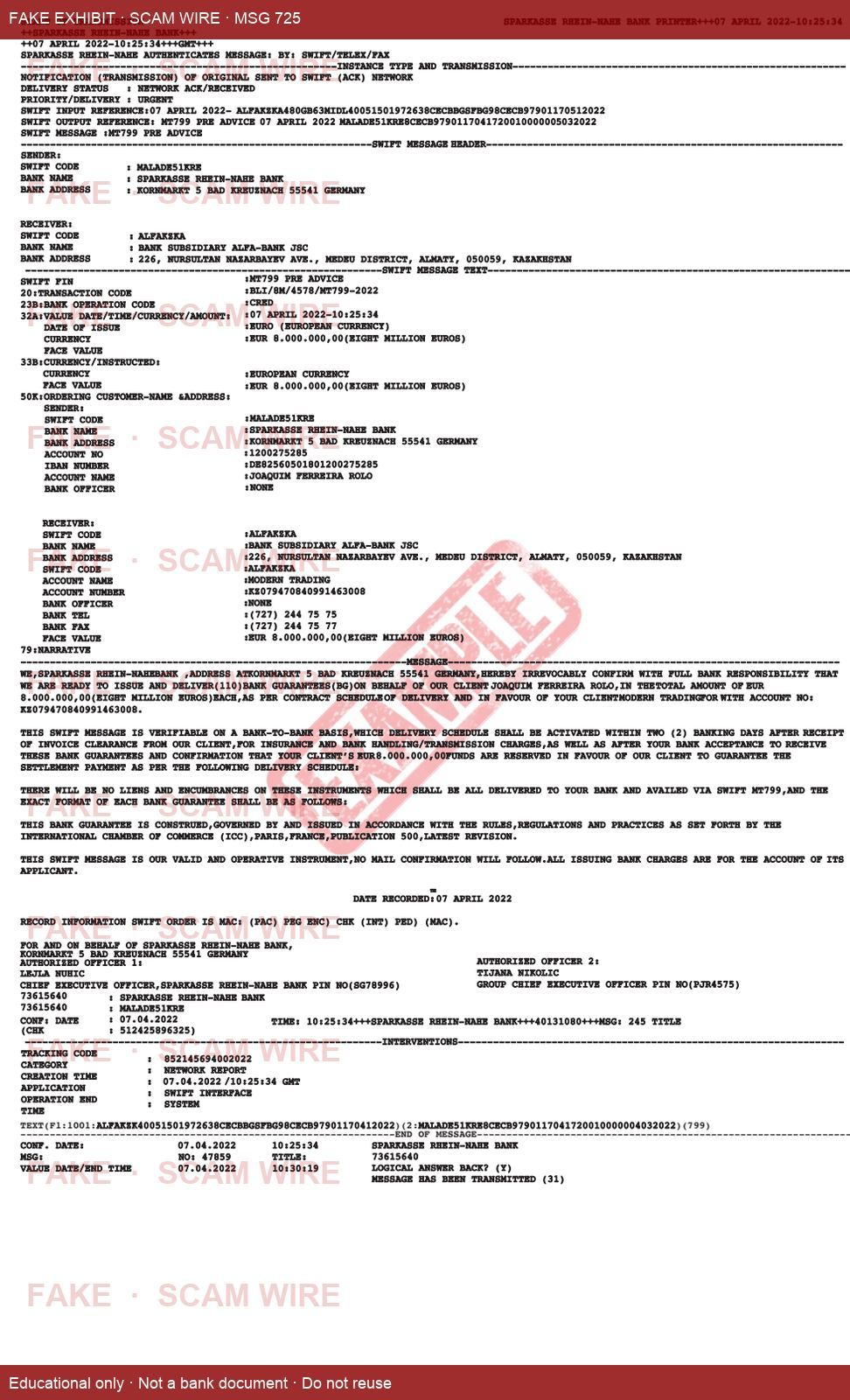
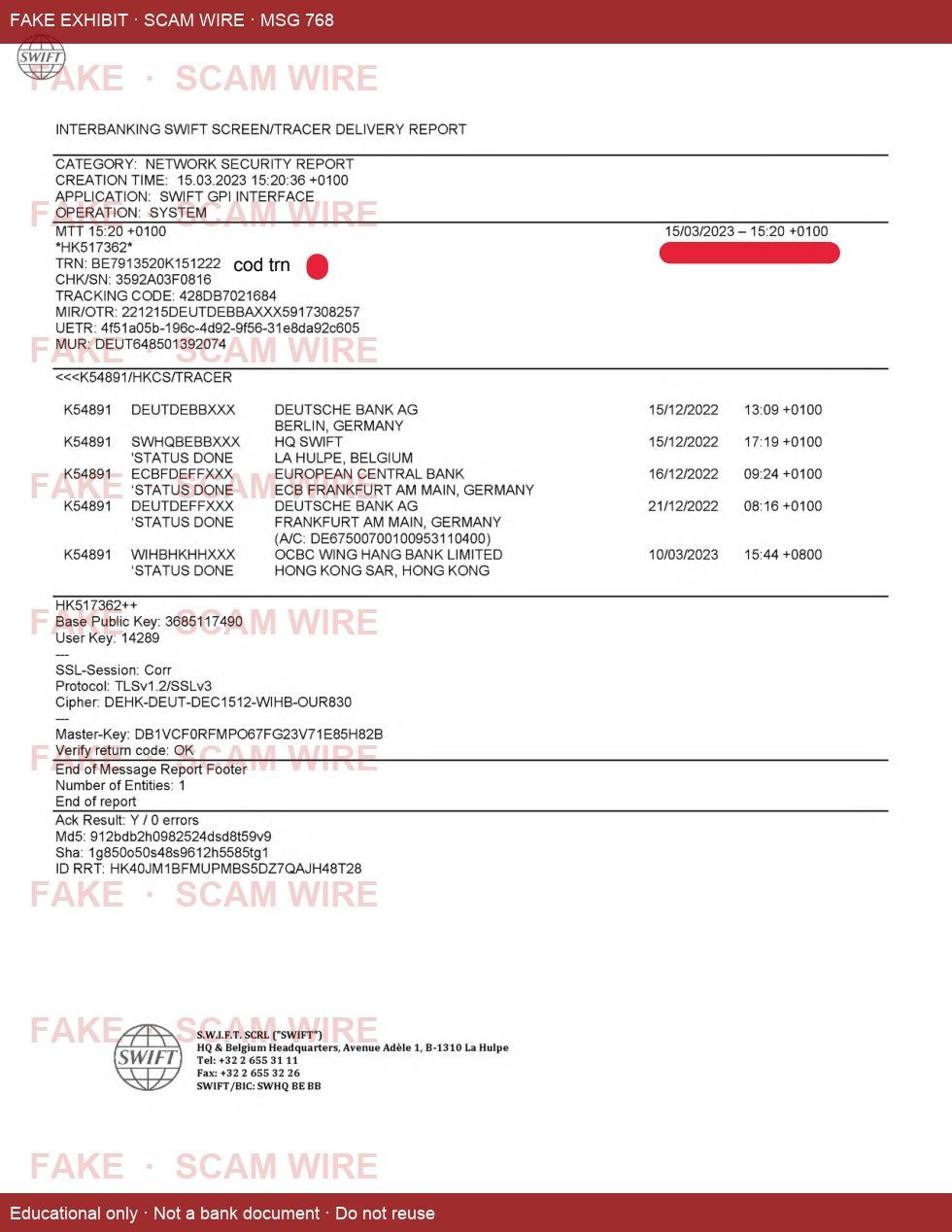
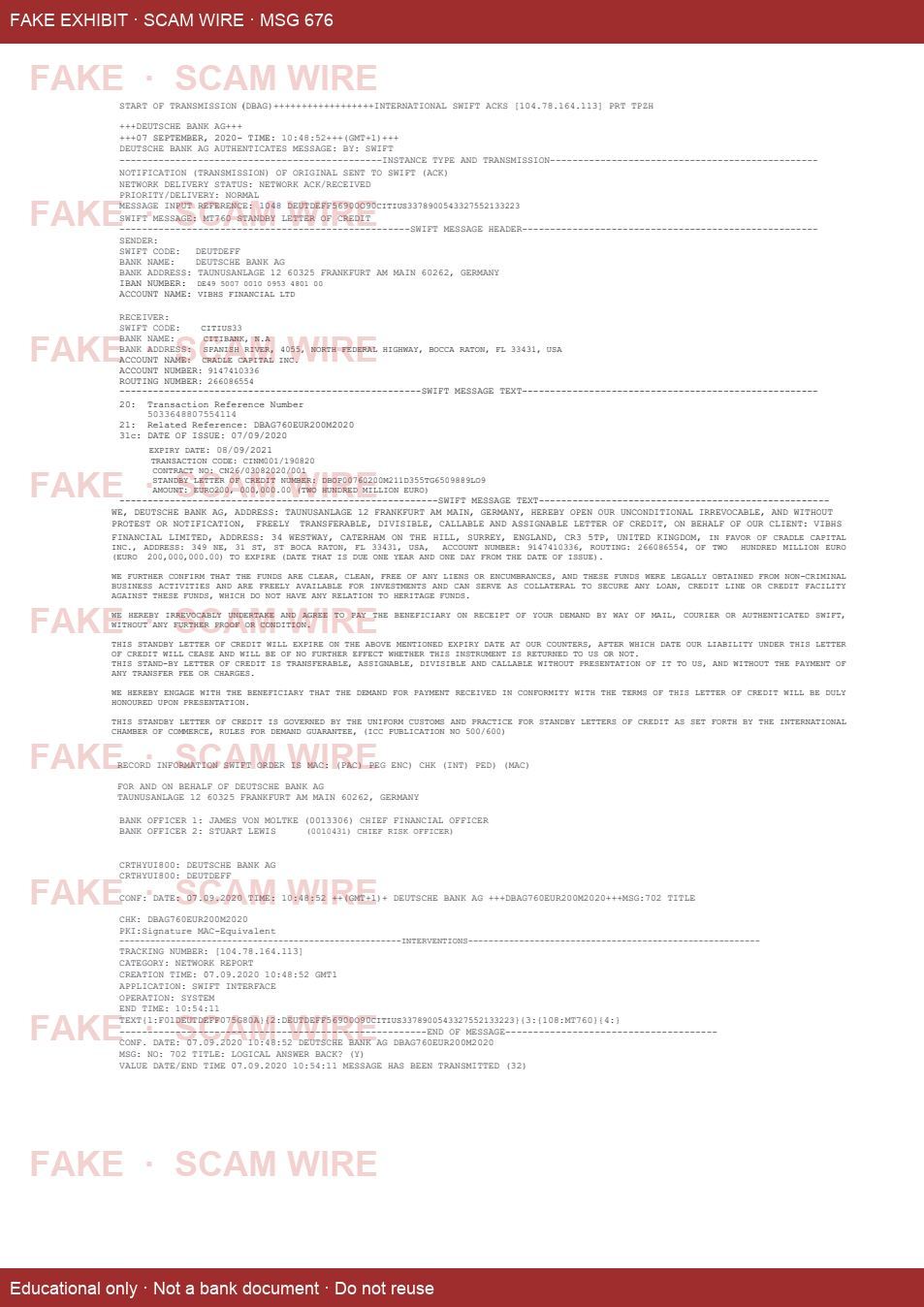
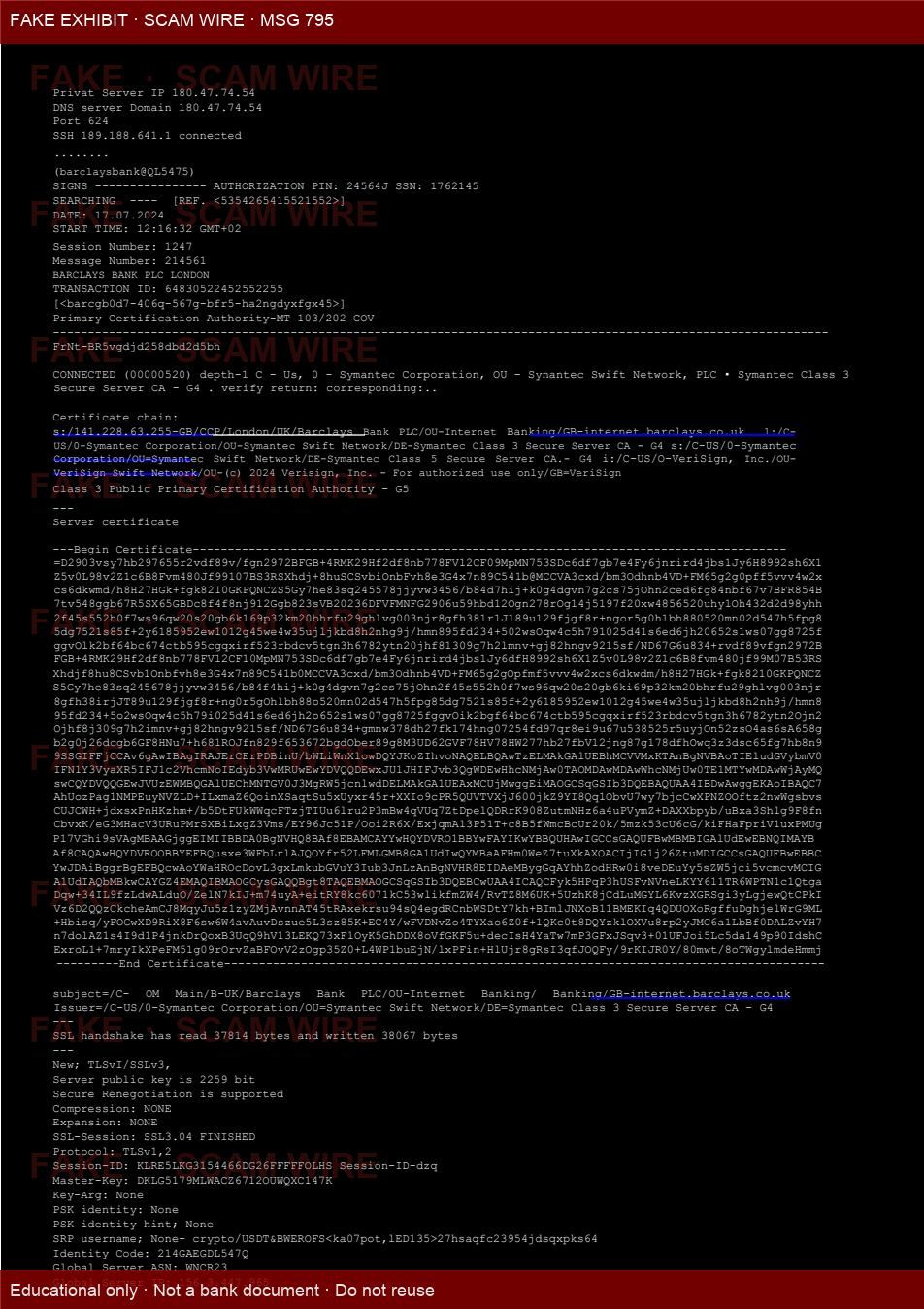
- Paper — PDF or screenshot labeled MT103, MT799 pre-advice, “SWIFT screen,” tracer, or cashier’s check.
- Urgency — “compliance window closes,” “GPI stuck,” “MASAK / compliance hold,” “one more authentication.”
- Fee — “release,” “SWIFT cost,” “lawyer escrow,” “tax,” “insurance,” often five or six figures.
- Goalpost move — after payment, a second fee appears; the instrument never lands on a real bank channel.
Related Scam Wire files: CF-006 fake MT103 packs · CF-024 MT799 · CF-021 SBLC/MT760 · CF-027 blocked funds · CF-002 advance fees.
4. Exhibits — watermarked first pages from the channel PDF archive
Images below are educational exhibits rendered from PDFs published on Scam Wire desk archive and stamped FAKE · SCAM WIRE EXHIBIT. They are not bank documents. Full PDF exhibit gallery: scamwire.news/exhibits (PDF-only archive).
5. What real verification looks like
- Call your bank on a number from the bank’s website — ask if any inbound MT message exists for the claimed UETR / amount / parties.
- Never pay a third party to “authenticate SWIFT.” Banks do not invoice strangers for MT103 copies as a product.
- Refuse “conditional MT103” stories that require your cash before their bank channel opens.
- Check every “regulated broker” on FCA Firm Checker / Warning List, FINMA lists, and local registers.
- Preserve the PDF, chat logs, wallets, and IBAN trail for a tip file.
6. Desk takeaway
The best “banking fraud news” of this cycle is not a single celebrity scammer — it is the industrial reuse of bank paper: fake MT103s, MT799s, MT760s, tracers, and billion-scale drafts sold as if they were money. INTERPOL’s First Light numbers show how large the social-engineering economy is. Our exhibit archive shows what the paper looks like when it lands on a desk.
Browse all PDF exhibits: /exhibits/ · tip desk: /tip/ · related case files: CF-001 · CF-029 · CF-030.
Standards: Educational reporting using public enforcement context and watermarked channel exhibits. Not legal advice. Bank names on forgeries are decoration, not endorsements. We do not invent convictions. Verify every payment claim through official bank channels.